02-07-2026
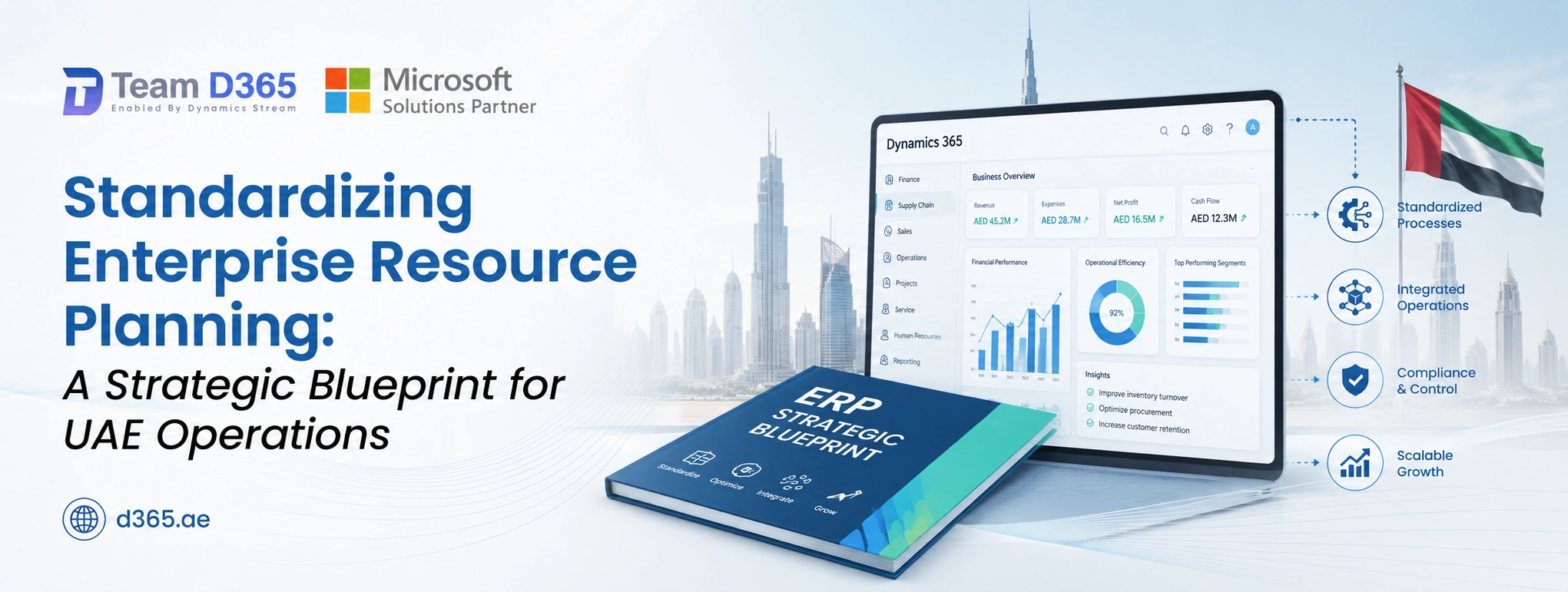
Standardizing Enterprise Resource Planning: A Strategic Blueprint for UAE Operations
Many organizations across the United Arab Emirates manage corporate finance, multi-channel sales, warehouse inventory, and customer databases using disconnected software applications. When critical information is spread across siloed programs, compiling unified operational metrics becomes labor-intensive, delaying period-end tracking and strategic business decisions. Teams often spend hours extracting, cleaning, and reconciling datasets from separate operational hubs before analysis can even begin.
Microsoft Dynamics 365 addresses this administrative fragmentation by consolidating core business processes into a unified, shared database infrastructure. By pairing enterprise resource planning (ERP) capabilities with comprehensive customer relationship management (CRM) features, the platform creates an integrated operational framework.
For modern enterprises looking to baseline their cloud solutions, the priority is to establish system architecture that maintains complete data governance, automates routine operational workflows, and adheres strictly to regional corporate regulations. Organizations executing these infrastructure modernizations must analyze system capabilities to determine whether to purchase Microsoft Dynamics 365 licensing or work with local deployment architects to optimize existing cloud environments.
Centralized Financial Management and Regulatory Compliance
Managing corporate finances across the UAE requires systems that provide precise accounting ledger control while maintaining alignment with local regulatory parameters. Legacy setups relying on manual data entries or extensive spreadsheet links introduce calculation latency and heightened validation risks.
[Disconnected Sub-Ledgers] ➔ [Manual Data Compilation] ➔ [High Audit Exposure]
VS.
[Dynamics 365 Single Schema] ➔ [Automated Financial Postings] ➔ [Real-Time Audit Readiness]
Dynamics 365 Finance establishes structured ledger tools that automatically capture transactional activities from connected modules. When a product shipping document is posted in the warehouse or a customer invoice is generated by a sales team, the matching accounting transactions populate the general ledger in real time. This centralized architecture minimizes manual intervention, balances transaction sub-ledgers automatically, and improves reporting accuracy across multi-currency operations.
For businesses operating locally, financial configurations must natively support compliance mandates established by the Federal Tax Authority (FTA). This includes tracking exact Value Added Tax (VAT) categories, supporting compliant corporate tax structures, and preparing electronic tax data reporting files directly from database records. Enterprise entities establishing these parameters frequently require specialized technical services to hire Dynamics 365 consultants Dubai to ensure localized accounting books remain fully audit-ready under local regulations.
Supply Chain Operations and Inventory Visibility
Trading, retail, and manufacturing enterprises operating with high-volume distribution models require precise insight into physical stock movements across distributed logistics networks. Without end-to-end item tracking, organizations often experience structural bottlenecks, such as carrying costly excess inventory or facing unexpected warehouse product shortages.
The supply chain capabilities within Dynamics 365 resolve these tracking blind spots by linking procurement, order fulfillment, and physical storage records into a unified visibility layer.
- Warehouse Management Optimization: The system manages advanced storage rules, directs picking sequences based on live volume availability, and tracks item positions down to the specific bin location.
- Procurement and Automated Sourcing: Purchase requisitions track automatically against real-time stock thresholds, preventing duplicate vendor ordering and stabilizing procurement cycles.
- Traceable Product Journeys: Item profiles track from initial vendor delivery through internal branch transfers down to final consumer delivery, preserving original item cost layers and exact storage batch numbers across all facilities.
By operating on unified cloud infrastructure, distributed logistics hubs can coordinate fulfillment schedules using identical inventory statuses. This structural clarity ensures procurement managers, warehouse operators, and financial analysts work from a synchronized data source. To achieve this baseline optimization across regional distribution loops, companies frequently coordinate with local experts to order Dynamics 365 Finance and Operations deployment suites tailored for complex logistics structures.
Unifying CRM Operations and Sales Pipeline Governance
An ERP platform reaches maximum performance when tightly integrated with outward-facing customer engagement tracking. Disconnected sales environments cause communications to break down, resulting in accurate customer profiles failing to sync with underlying distribution or billing departments.
Dynamics 365 Customer Engagement unites sales, marketing, and client services modules into the main corporate database framework. When your account management team logs interactions or shifts potential opportunities through the sales pipeline, those records directly inform your credit managers and procurement coordinators.
| Operational Function | Legacy Disconnected Software | Integrated Dynamics 365 Architecture |
|---|---|---|
| Data Synchronization | Manual batch exports prone to latency | Real-time shared transaction database |
| Financial Visibility | Billing status hidden from sales accounts | Credit limits and account balances link natively |
| Order Processing | Re-keying data between sales and ERP systems | Automated conversion from quote to warehouse order |
| Customer Insights | Siloed interaction records across local apps | Unified timeline accessible across all company tiers |
When the sales loop interfaces cleanly with the core financial ledger, the entire order-to-cash workflow accelerates. Customer payment behaviors, outstanding invoices, and contract milestones become visible to sales teams, allowing accounts to be managed with full operational awareness.
Technical Deployment and System Implementation Governance
Migrating legacy on-premise systems or consolidating distinct software applications into a single cloud ERP environment requires a structured, phased implementation methodology. Successful system deployment centers on robust data migration scripts, precise workflow mapping, and continuous user training.
The platform operates on secure cloud infrastructure, which means companies remove the ongoing overhead of maintaining heavy local servers, complex physical database arrays, and custom hardware environments. This modular, cloud-native design permits organization structures to activate core modules—such as general ledger accounting and standard invoicing—before expanding systematically into advanced manufacturing execution, custom service apps, or predictive analytics tools as operational footprints expand.
How d365.ae is Helping Customers Across the UAE
Successfully configuring enterprise resource planning tools within the competitive landscape of the Middle East requires deep technical localization, strict focus on regional compliance laws, and hands-on system architecture experience.
Through d365.ae, Dynamics Stream delivers specialized implementation, cloud migration, and optimization services engineered specifically for businesses operating across the United Arab Emirates. Whether your organization needs to deploy full enterprise-scale capabilities or intends to buy Dynamics 365 Business Central UAE licensing tailored to support mid-market growth, our Microsoft-certified consulting teams align system logic with your underlying corporate objectives.
Our specialized platform helps UAE customers navigate complex regional transformations by providing:
- Native FTA Compliance and Corporate Tax Support: We integrate local tax configurations directly into your core ledger accounts. This automates the calculation of UAE VAT, ensures readiness for standard audit files (FAF), and positions your systems to handle corporate tax reporting seamlessly.
- E-Invoicing Readiness and Regional Modules: With the Federal Tax Authority (FTA) expanding compliance mandates, d365.ae builds localized extensions directly into your billing architecture. This ensures large enterprises and official service providers can process electronic invoicing mandates automatically without disrupting current supply chains.
- Localized Supply Chain Optimization: We configure D365 to handle complex logistical challenges specific to the UAE trading environment, such as managing multi-currency import logistics, port clearing records, and 3PL distribution networks across free zones.
- Zero-Drop Cloud Migrations: Our technical group shifts regional enterprises away from legacy applications (such as older Dynamics AX, NAV, or fragmented databases) into a modern cloud environment while preserving data history and localized configurations.
Contact our Dubai technical operations center via d365.ae to organize a comprehensive review of your current business applications environment and anchor your digital operations against local regulatory shifts.